
Yoga has never been one thing.
It was never meant to be contained by a single sequence, a fixed room temperature, or a particular aesthetic. Long before it became something we booked into or labelled, yoga was a relationship between breath and body, effort and ease, stillness and motion.
Over time, that relationship has taken many forms.
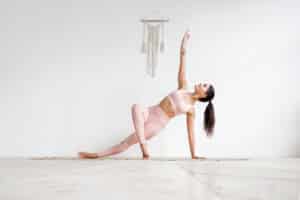
Some practices ask us to move continuously, rhythmically, as if following the current of a river. Others ask us to stay, to soften, to wait, to listen, like roots settling deeper into the earth. Neither is more authentic than the other. Each reveals something different.
Hatha yoga is where many of us begin. Measured, deliberate, unhurried. It offers space to feel rather than perform, reminding us that steadiness itself can be a form of strength.
Vinyasa flows onward, guided by breath. Movement becomes language. One posture dissolves into the next, and the practice feels less like instruction and more like conversation, between body and moment.
Ashtanga brings repetition and discipline. The same sequence, again and again, revealing that change doesn’t always come from variety; sometimes it comes from returning.
In Iyengar practice, attention sharpens. Alignment matters. Props support the body not as shortcuts, but as teachers. Precision becomes a kind of care.
Then there are practices that slow us down entirely.
Yin invites stillness: long-held shapes, quiet sensations, the subtle architecture beneath muscle and bone.
Restorative goes further, asking almost nothing of us at all. Supported, held, and allowed to rest, the body remembers how to soften.
Some paths work with energy as much as form.
Kundalini weaves breath, movement, sound, and focus, creating practices that feel internal and expansive, less about shape, more about awareness.
And then there is heat.
Hot yoga, and its most structured form, Bikram yoga, developed by Bikram Choudhury, brings intensity and challenge. Fixed sequences, high temperatures, strong sensations. For some, this is clarity. For others, it is too much. As with all yoga, the value lies not in the label, but in the listening.
What matters most is not the style you choose, but the quality of attention you bring.
Yoga changes as we do. The practice that steadies you in one season may no longer serve you in another. A flowing practice one day, a resting one the next, both equally honest.
At its core, yoga is not a performance.
It is a meeting.
A meeting between movement and meaning.
Between effort and restraint.
Between who you are today and what you need now.
There is no single right way to practice.
Only the quiet act of showing up, and responding with care.
