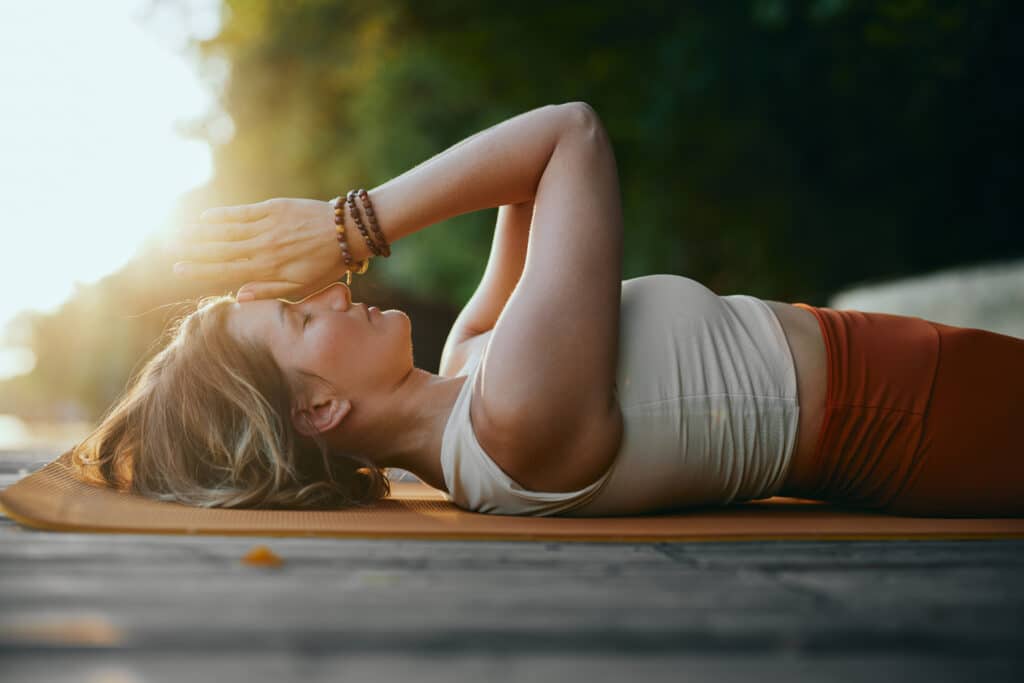
In a culture that values momentum and intensity, starting slowly can feel counterintuitive. Many people arrive on the mat already carrying expectations — to move quickly, to feel challenged, to make the most of limited time. Yet one of the most supportive choices a practitioner can make is to begin with ease.
Starting slow is not about doing less.
It is about allowing the body and nervous system to transition intentionally into practice.
When we move too quickly at the beginning of a session, the body may comply, but it rarely feels settled. Muscles are colder, breath is shallow, and attention is divided. A slower beginning, simple movements, unforced breathing, moments of stillness, creates space for awareness to develop before effort is introduced.
From a physiological perspective, this matters. Gentle movement and conscious breathing activate the parasympathetic nervous system, signalling safety. This reduces unnecessary tension and allows mobility and strength to develop more sustainably. Injury risk decreases, and movement becomes more coordinated and responsive.
Starting slowly also has psychological benefits.
It offers a pause between the pace of daily life and the inward focus of practice. Rather than carrying stress directly onto the mat, practitioners are given time to arrive fully, mentally as well as physically.
Over time, this approach reshapes the way yoga is experienced. Progress becomes less about intensity and more about consistency. Practice feels supportive rather than demanding. The mat becomes a place of listening, not performance.
Importantly, starting slow does not mean staying slow. A considered beginning often allows for greater depth later in the practice, stronger movement, clearer focus, and a deeper sense of presence. The difference is that effort arises from readiness rather than pressure.
Yoga is a long-term relationship with the body. Beginning each practice with patience reinforces trust, resilience, and respect for where you are, not where you think you should be.
In learning to start slowly, we learn to practise with care.
And that care, carried beyond the mat, becomes one of the most valuable outcomes of practice.